Home › Programs › De-escalation Training
Veteran-Led · Scenario-Based · Connecticut
De-escalation training in Connecticut.
Practical verbal de-escalation for people who face the public every day — read the situation earlier, set boundaries, and talk it down instead of escalating it.
Custom-scoped · Written quote · No obligation20-minute conversation · Clear scope · Written next steps · No funding guarantee
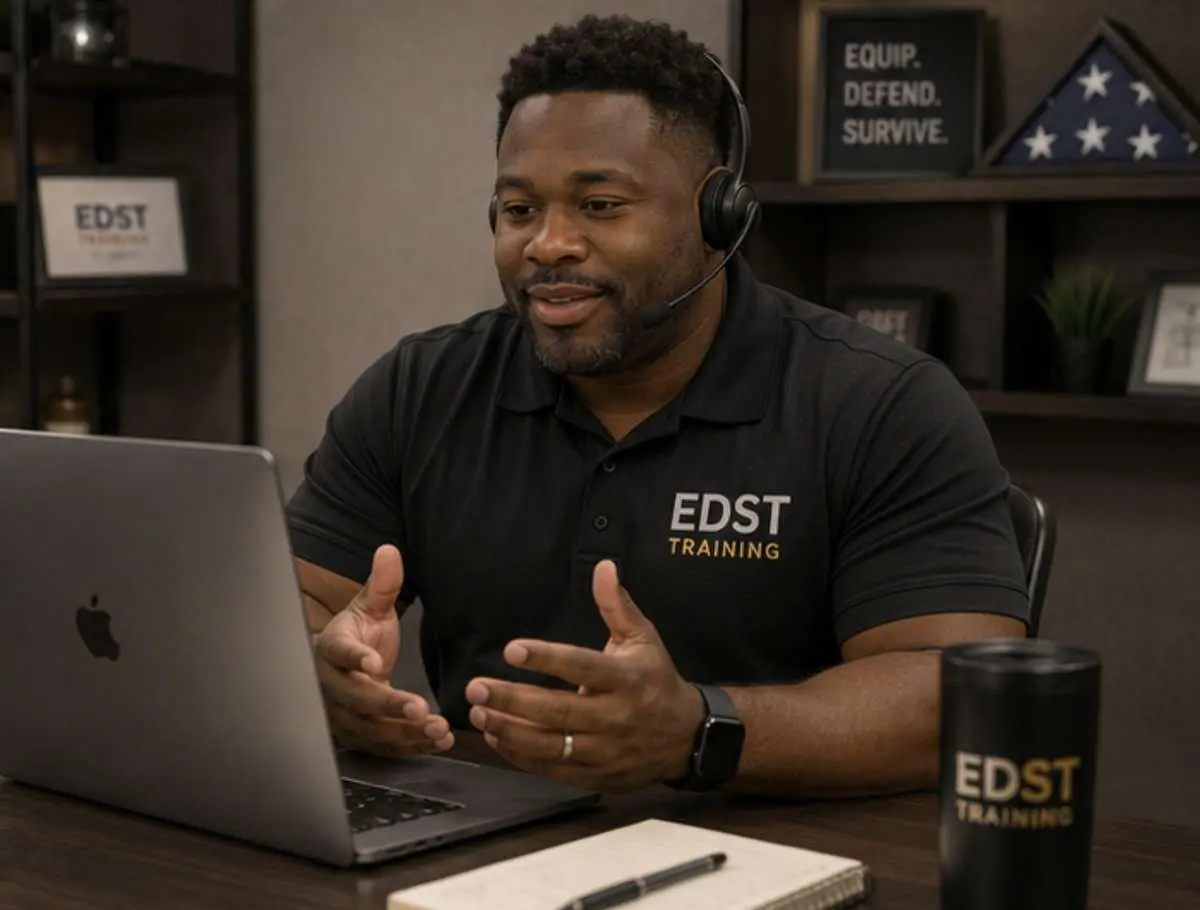
Who This Is For
Built for teams that face the public.
- Human-services staff, case managers, and home-visit field teams
- Front-desk, retail, delivery, and customer-facing employees
- Youth-serving programs, schools, and community organizations
- Supervisors who respond when situations escalate
What Changes After Training
Outcomes, not a checkbox.
- Read early warning signs before a situation turns
- Use calm, structured verbal de-escalation techniques
- Set clear boundaries while keeping respect intact
- Know when to disengage and how to report
- Practice real conversations, not just theory
What We Cover
Learn it. Practice it. Improve the plan.
Foundation — Learn It
- How escalation actually develops
- Behavioral warning signs
- Verbal technique: tone, distance, wording
- Boundary-setting scripts that work
- Disengagement and reporting decisions
Application — Live It
- Role-played difficult conversations
- Escalating-individual practice with role players
- Field and home-visit safety scenarios
- Structured feedback and debrief
- Written improvement priorities delivered
Every engagement ends with attendance documentation and a written summary of improvement priorities for your leadership, insurance, and grant files.
Funding
Funding may be possible. The fit must be verified first.
Some nonprofit, public-sector and employer training projects may fit a current or future funding program. EDS identifies likely pathways and prepares accurate vendor documentation — training scope, learning objectives, instructor qualifications, and a fixed-price quote. The funding agency controls eligibility, allowable costs, procurement, deadlines and awards.
Some qualifying organizations may use grant funds for approved planning, equipment, training or exercises. Eligibility, allowable costs, procurement requirements, deadlines and awards are controlled by the funding agency. EDS Training does not guarantee funding.
Common Questions
Frequently asked
Is this right for human-services and field staff?
Yes — it is one of our core specialties. Scenarios are built around home visits, lobbies, youth programs, and public-facing service work.
Is this lecture-based?
No. The heart of the training is practiced conversation — role players, realistic pressure, and structured feedback.
Does it combine with other programs?
Yes. De-escalation pairs naturally with workplace violence prevention and active threat response in a single scoped engagement.
How is pricing handled?
Custom-scoped with a clear written quote after a 20-minute conversation.
What clients say
“My people told me they feel safer doing their jobs.”
“Calm, professional, no scare tactics. Everybody walked out more confident than they walked in.”
Start with the smallest useful next step.
A 20-minute conversation identifies your audience, risk, format and date — and gives you a clear scope and price in writing.